
How Isle of Wight Property Records Search Works
Most lookups start at the Commissioner of the Revenue public access search. Enter an address. Or try an owner name. Results include property history, improvement information, and a map link. Copy the parcel identifier exactly as displayed. That identifier links the assessment roll and county map. It also opens a later deed search in the Clerk's land records.
Then match the next question to the right office. The Circuit Court Clerk keeps deeds, deeds of trust, plats, and liens. The Treasurer carries the bill and payment account. The county GIS Parcel Viewer adds parcel geometry plus flood-zone and fire-hydrant context. None of these systems merge into a single title record. Remember that a map line is not a survey. An assessment entry never rules out another interest.
- Enter the address in the Commissioner portal. If the address misses, try a shorter street name.
- Copy the Parcel ID from the matching result and keep its dashes and letters.
- Use the identifier or owner name to find the latest recorded deed in the Clerk's land-record index.
- Check the Treasurer's account for a balance, then open GIS for parcel and hazard context.
- For an image, certified copy, or older record, ask the Clerk about SRA access or the courthouse Record Room.
The Isle of Wight Property Records Offices
Isle of Wight splits its record trail by office. The Circuit Court Clerk serves as land-record custodian. Deeds and plats answer to that office. The Commissioner of the Revenue maintains the searchable real-estate assessment data. The Treasurer manages real-estate accounts, payments, delinquency, penalties, and interest, while planning and permit files sit elsewhere, and the county publishes no public address search for that material.
Isle of Wight Circuit Court Clerk
Land records and recorded instruments
Isle of Wight Courthouse
Contact through the county directory
Commissioner of the Revenue
17090 Monument Circle, Suite 113
Windsor, VA 23487
757-365-6219
Isle of Wight County Treasurer
Tax bills, payments, and account status
Real-estate payment portal
757-365-6228
The Commissioner posts its hours and mailing address for anyone who needs them. The office is open Monday through Friday, 8:30 a.m. to 5 p.m. Mail goes to P.O. Box 107, Isle of Wight, VA 23397. Those details help when an assessment entry looks incomplete or wrong. Recorded-instrument questions go to the Clerk. Payment and delinquency questions go to the Treasurer. A request to inspect archived permit files should name the county or town that created the record.
Isle of Wight Property Search Keys
Isle of Wight keeps its search guidance practical. It tells you how much detail to enter and what to do without an exact address. A broad first pass returns more candidates. A full spelling narrows them fast. Once a likely property appears, run a second exact search on the parcel ID instead of trusting a similar street name.
The Commissioner asks for a Parcel ID of 9 to 14 characters with dashes. Examples include 06B-01-010, 32-01-098, and 24A-01-A011. An owner search takes the last name first. Skip the comma. An address can be a bare street name, a full number and street, or a number with an asterisk such as 123*. Drop the street type and compass direction when you need a wider match.
| Portal Field | Entry Type | Local Search Note |
|---|---|---|
| Parcel ID | Text | 9-14 characters with dashes; partial text broadens results |
| Owner Name | Text | Last name first, no comma; short terms return broader matches |
| Property Street Address | Text | Omit street type and direction for broader matches; 123* is accepted |
The Commissioner's search instructions also warn that “John” will not match “Johnson.” That matters when spelling is shaky. Try a shorter fragment first. Then use the full legal name. Do not treat a letter in an APN as proof of Smithfield or Windsor; the county publishes no official prefix legend.
Isle of Wight Deed Access Choices
Deed research here reaches back centuries. The FY23 county budget puts records from the 1600s to the present online for viewing. The cutoff for each book or index series varies. The statewide Secure Remote Access system may give free index-only access when the clerk enables it. Remote images are limited to authorized subscribers. Those terms require an agreement and applicable payment.
A courthouse trip changes the math, since Record Room viewing is free under the county budget. That helps when a remote result shows an index entry without an image, or when a very old book needs staff help. Treat an SRA index as a locator. It is not the official court record. The Clerk should confirm the official copy when a title or legal question turns on exact wording.
Virginia Secure Remote Access opens the door to land records across the state. Its landing page displays the statewide gateway and its access notice. It will not hand you a specific deed result. Isle of Wight's own office can explain local authorization and the right route to a historic volume.
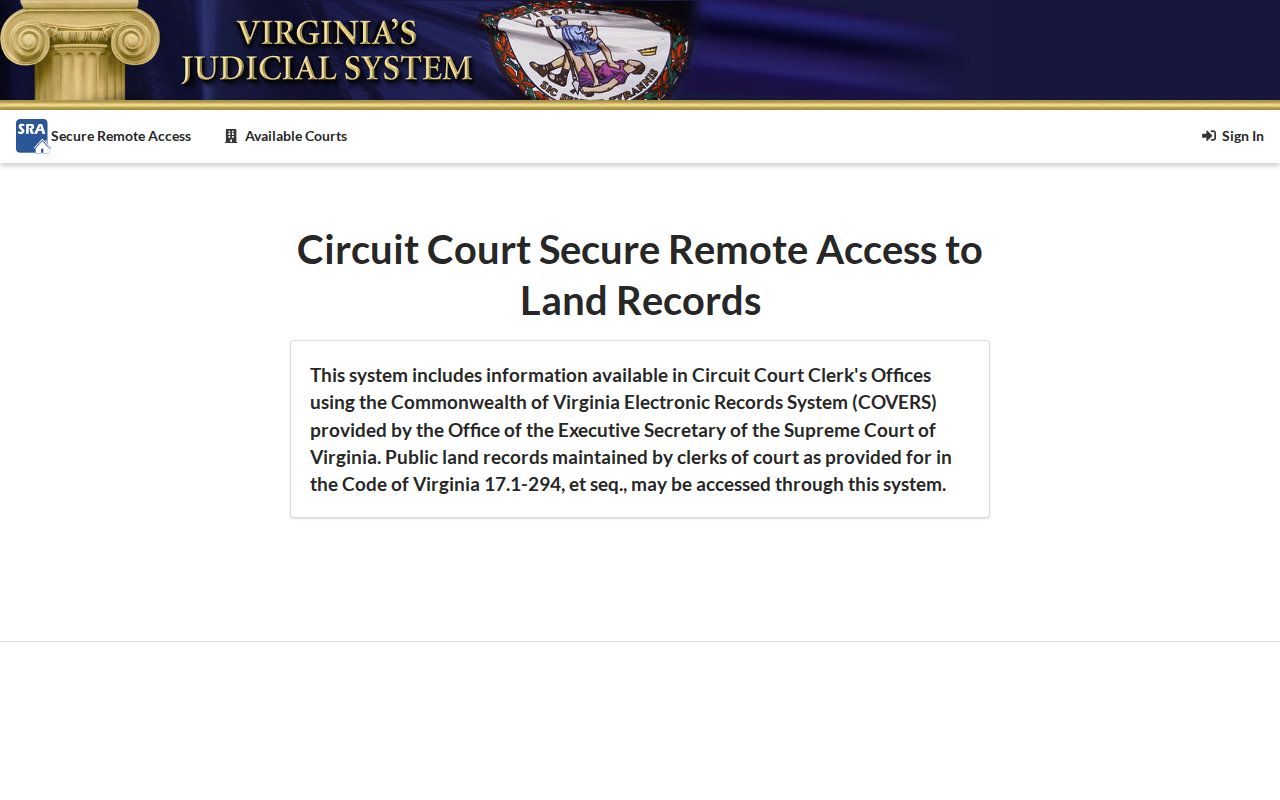
The split is practical. An index entry identifies the deed, while the instrument image supplies its exact terms.
Isle of Wight Assessment and Tax Records
Assessment and tax questions in Isle of Wight go to two different offices. The Commissioner of the Revenue publishes a public portal. It holds residential and commercial assessment records, property history, and improvement details, plus a link to an interactive map. Virginia Code §58.1-3122.2 makes that data public. The county warns it can be incomplete or inaccurate. Corrections belong with the Commissioner, not the Treasurer.
The Treasurer's Paybill site is a payment route, not a full tax-roll search. Users pick a bill type and a payment type. Then they enter an Isle of Wight account number and amount, confirm, and keep the confirmation number. Real Estate Property Payment is one listed option. Credit card and electronic funds transfer are available. For due dates, processor charges, or the delinquent list, ask the Treasurer at 757-365-6228 about account status.
The Paybill service works best when you separate current taxes from delinquent taxes, penalties, and interest. An unpaid balance starts with the Treasurer. An assessment dispute starts with the Commissioner. A recorded tax lien or transfer is a separate matter. The Circuit Court Clerk keeps that index.
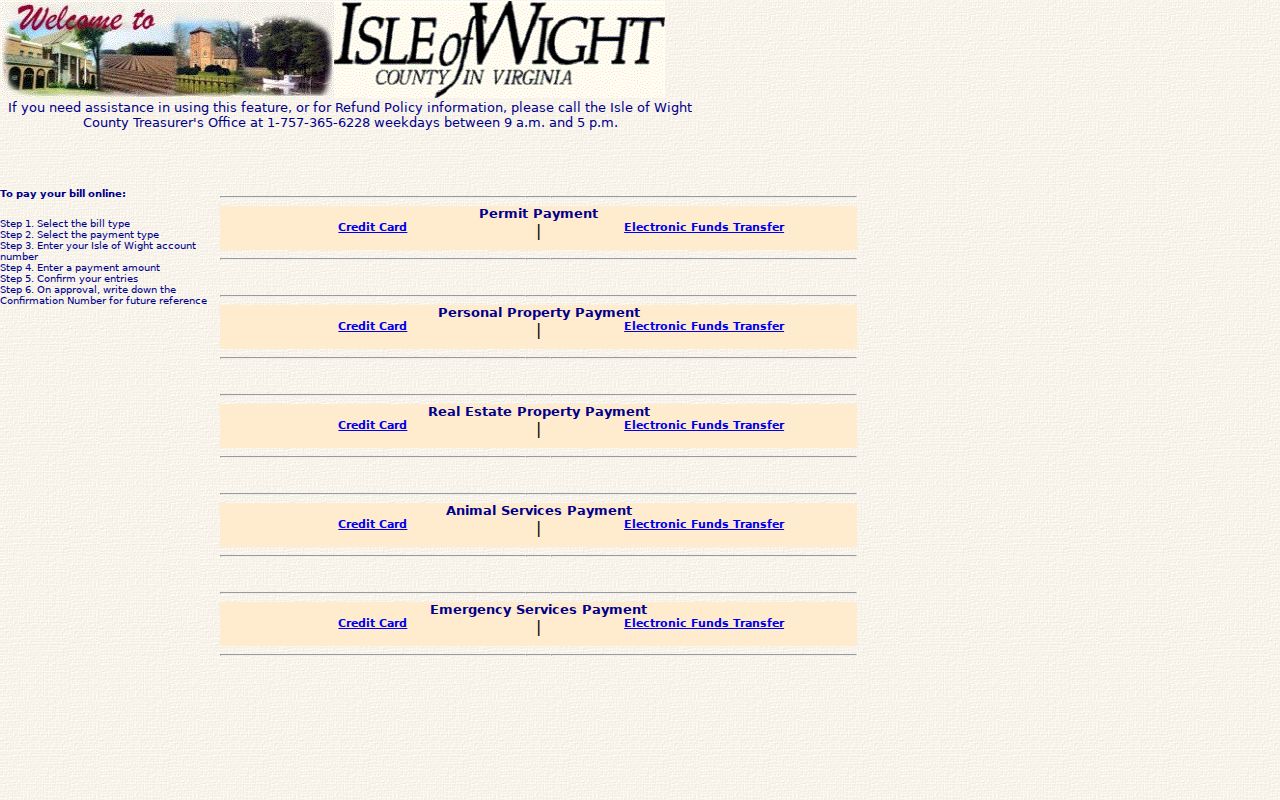
Keep that payment confirmation number with your parcel account details. It is what the Treasurer will ask for if you call to follow up.
Isle of Wight Property Record Types
Each instrument creates its own kind of Isle of Wight property records. A deed marks a transfer. A deed of trust or lien attaches a claim to land. An assessment entry drives local taxation. A plat lays out a recorded subdivision or tract. Permit files document approved work or land-use review. The table points to the right custodian. No single database serves as a full title record.
| Record Type | What It Documents | Kept By | Access |
|---|---|---|---|
| Deeds and deeds of trust | Recorded transfers and financing instruments | Circuit Court Clerk | SRA index; remote images by subscription |
| Liens and releases | Recorded claims and later satisfaction instruments | Circuit Court Clerk | SRA or free courthouse Record Room viewing |
| Assessment and parcel data | Owner, parcel, history, improvements, and assessment context | Commissioner of the Revenue | Free Public Access portal |
| Tax bills and payments | Account balance, payment, delinquency, penalty, and interest | County Treasurer | Paybill or Treasurer contact |
| Plats and permit files | Lot layout, subdivision and approved land work | Clerk, county, or town | SRA, posted town forms, or records request |
For a transfer, read the instrument. Its legal description sits in the Isle of Wight deed records. For a balance, call the Treasurer or use the portal. The tax roll is not the deed index. Permit and subdivision questions may span town and county files. Record the parcel ID and ask each office for what it holds.
Isle of Wight GIS Parcel Context
The County GIS Parcel Viewer maps real-estate tax parcels, flood zones, and fire hydrants. Its ArcGIS listing says parcel data is usually refreshed in the first week of each month. That refresh applies to the map layer alone. It does not cover the assessor roll. Nor does it promise a deed lands in GIS the day it is recorded.
Treat the map as orientation for a parcel. Then compare the parcel identifier against the Commissioner's record. Check the legal description in a recorded plat or deed too. Smithfield lists a broader local layer set. It includes corporate boundary, contours, structures, hydrology, zoning, future land use, utilities, and aerials. The town notes its GIS is not currently internet-accessible. Parcel data itself belongs to Isle of Wight County.
The County Parcel Viewer item documents the map's parcel, flood, and hydrant layers. The image shown is a viewer listing, not a selected parcel or a survey. Field tools and exact layer labels appear in the live app.
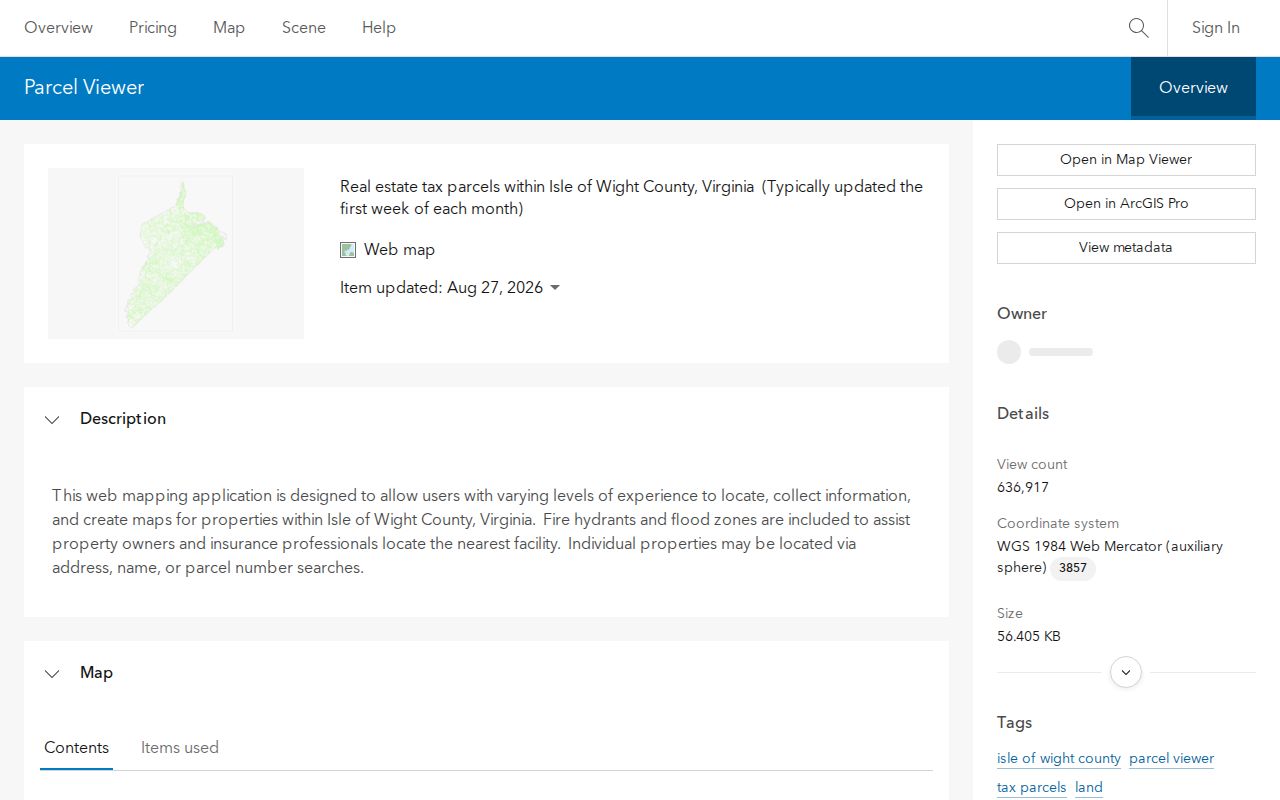
The viewer is only a map aid. A recorded plat or a survey answers boundary questions with far more authority.
Isle of Wight Property Record History
Smithfield's original land pattern still shapes property research. In 1752, Arthur Smith IV split a family farm into 72 lots and four streets near the Pagan River. A downtown deed may hinge on a lot, block, or older street name instead of a modern neighborhood label. It might also hinge on an adjoining feature. A current address finds the assessment card. But a plat or deed description ties today's parcel to that early grid.
The town's Historic Preservation Overlay covers roughly 650 properties. Its boundaries track the Route 10 Bypass, Little Creek, Cypress Creek, and the Pagan River. Exterior changes and other listed work generally go through the Board of Historic Architectural Review. That adds a town planning file to the county record trail. It does not change who keeps the county deed or assessment.
For a historic property, set the assessor result beside the recorded plat and the town review file. The Library of Virginia's Chancery Records Index can add testimony or exhibits. That applies when a dispute, partition, or heir question shaped a transfer. It supplements the deed index. It does not replace the record of every conveyance.
Isle of Wight Records at Windsor's Edge
Windsor's boundaries shifted on July 1, 2001. Virginia approved an annexation. It moved 2.82 square miles out of Isle of Wight County. The land joined the town. That growth took Windsor from about one square mile to 3.82 square miles. So a parcel near the old edge may now answer to town planning rules. Its assessment, taxes, GIS entry, and deed all remain Isle of Wight County records. The split matters more than most people expect.
History adds another wrinkle. Corrowaugh became a post office in 1852. The railroad brought Windsor Station. The General Assembly granted a town charter in 1902, and U.S. Route 460 opened through town in 1929. Older deed records and plats may carry any of those names. They may also cite an old route reference. A postal address alone will not tell you whether a current town permit applies.
To settle a boundary question, compare the deed's legal description against the county parcel viewer. Then request the town's planning file. Windsor's ordinance counts division into two or more lots as subdivision work. It also preserves previously approved final plats. The town publishes no online permit-search interface. Ask Town Hall for records by street address and tax-map number.
Isle of Wight Historic Record Trails
Isle of Wight land records run deep. The county Clerk's budget describes holdings reaching back to the 1600s. It also funds a preservation effort for fragile loose papers from that era. Those papers live in protective sleeves and archival folders. Indexing of them continues. That is a strong reason to ask the Clerk for help. A modern deed index sometimes stops at a gap. The starting year of each online deed series varies, so confirm coverage with the office.
The Library of Virginia's Chancery Records Index covers court causes, not every deed. Still, a chancery file can explain how heirs, disputed boundaries, or a partition shaped a tract. Start with the locality map. Then pair any relevant cause with the Clerk's recorded instruments and plats. The index can hand you a historical lead. The local official file remains the place to verify a deed.
The Library of Virginia Chancery Records Index offers an availability map. It also offers indexed or scanned case material. It stretches a property history when an old transfer involved a lawsuit. It does not replace a grantor-grantee search through the Clerk's deed records.

Treat a chancery record as a clue. Follow it to the relevant deed, will, or plat, then verify the transfer in the Clerk's local records before you rely on it.
Isle of Wight Public Record Access
Free and paid access often tap different layers of the same system. A free name or party index can point you to an instrument. It does not show the full image. A paid remote subscription may open that image. A trip to the courthouse Record Room allows free viewing, per the county budget description. A certified copy is a separate request, so ask the Clerk about the current fee.
Jurisdiction matters just as much. The Commissioner and Treasurer handle county property functions. Smithfield's planning pages carry town application forms. Windsor keeps zoning and subdivision records under its own ordinance. Virginia FOIA opens a request route for anything not posted online. A good request names the custodian, parcel ID, address, and date range. The office has five working days to respond, with an extension allowed under the statute.
Limits of Isle of Wight Property Records
A public record has limits. It can show a deed, an assessment, a tax account, or a parcel shape. It cannot prove a title is clear. It cannot fix an exact boundary. It cannot promise that an assessment equals a likely sale price. The Commissioner's data carries its own accuracy warning. The GIS parcel layer exists for tax and reference use. The Clerk's index helps you locate instruments. But image access and the official record still answer to the Clerk's process.
Put these records to work on property history. Use them for boundary questions, civic review, and careful due diligence. A transaction, construction plan, or legal issue may depend on a record. Ask the custodian to verify it. Virginia's Address Confidentiality Program, under §2.2-515.2, shields specified identifying records for eligible participants. And public access never excuses repeated unwanted contact or harassment.
Lawful use. Isle of Wight records support property research and civic transparency. Do not use owner information to stalk, threaten, or harass anyone, and do not treat a search result as a title opinion or survey.
Isle of Wight Record Limits to Check
Some details are simply not published online. These include the oldest year for each deed book, the field labels on assessor results, the local SRA document-type list, the Treasurer's current processor fee, and any county tax-sale list. Treat each one as a question for the custodian. Do not fill the gap with another county's rules.
When a search truly matters, keep the parcel ID, legal description, owner name, instrument reference, and your search date together in one place. Ask the Clerk to confirm a deed image or an older book. Ask the Commissioner to explain an assessment entry. Ask the Treasurer to verify a balance. That habit makes an Isle of Wight property search far more dependable, without pretending every record is online and current at the same moment.