
Tracing Isle of Wight Former Owners
Former-owner research begins with a deed for the exact parcel. Then move backward through grantor and grantee names. Each row in the table is a record of what the deed itself says. It is not sample Isle of Wight transaction data. Before an earlier deed counts as the next link, the parcel, legal description, date, and index reference must all line up.
| Transfer Date | Grantor → Grantee | Deed Type | Book/Page or Instrument |
|---|---|---|---|
| Latest recorded date | Copy each party name as indexed | Use the instrument's local label | Write the exact reference shown |
| Prior acquisition date | Current grantee should appear as earlier grantee | Compare the deed's type | Record the book/page or number |
| Earlier transfer date | Follow the earlier grantor to a prior grantee entry | Do not assume a deed type | Match parcel description and exceptions |
| Historic book date | Continue only when the tract still matches | Ask the Clerk for old series | Confirm the volume at the Record Room |
Pull the current assessment record first. It names the present parcel and its owner. From there, find the latest deed and work back, asking the Clerk about book references, loose papers, and the Record Room when an older gap appears. A chancery cause helps only when a court case actually exists, and it never replaces the grantor-grantee index for tracing each transfer.
Isle of Wight Clerk and Archives
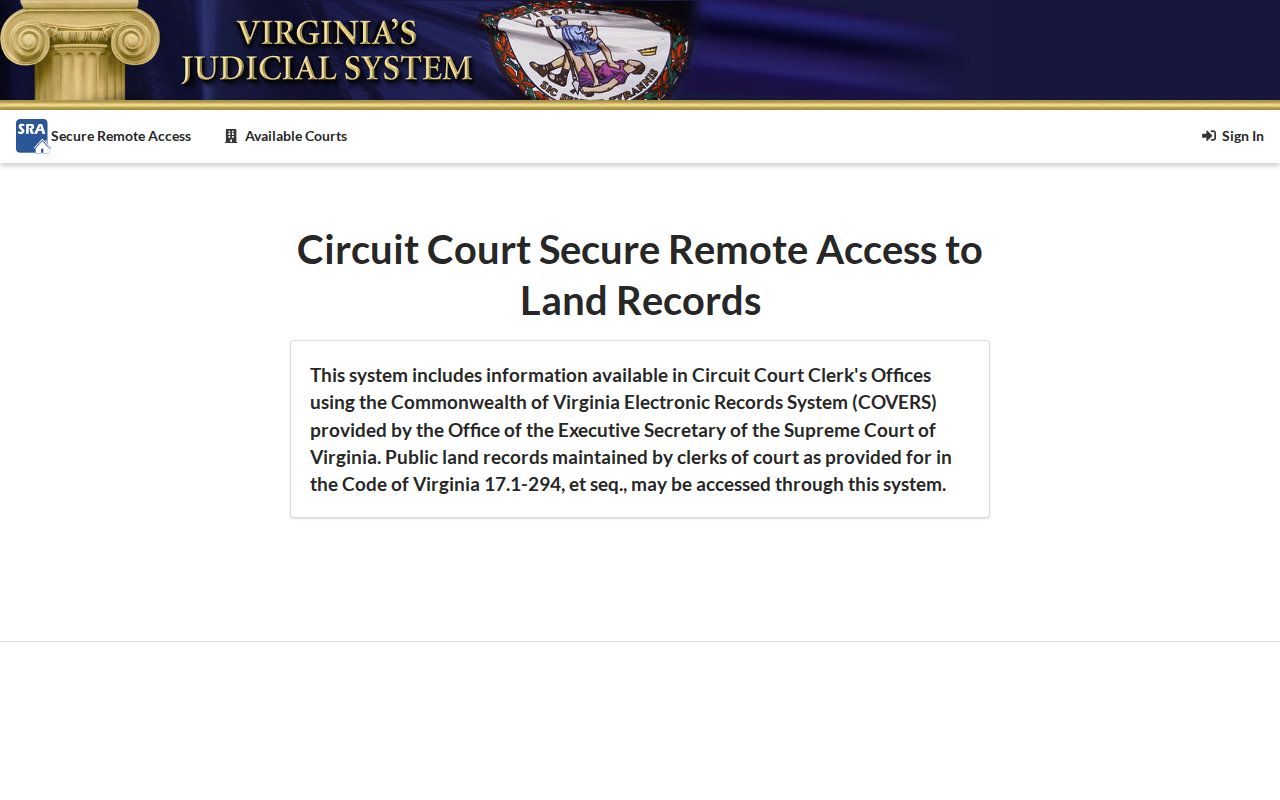
Isle of Wight land records reach remote viewers through Virginia Secure Remote Access. Free index-only access exists where a clerk enables it. Document images go only to authorized subscribers. A signed agreement and payment may apply. The county budget states that viewing records in the courthouse Record Room is free.
That split matters when an index points to an old deed but the image will not open. Write down the party names, recording date, legal description, and the book/page or instrument number. Then ask the Clerk where the image lives. It may sit in SRA, a courthouse book, or a historic file. A subscription does not set each series' earliest year.
Virginia SRA is the statewide gateway for any Isle of Wight property search. It is the right first stop online.
For any title question, confirm the official record with the local Clerk. A browser image alone is not the last word.
Isle of Wight's Loose Paper Trail
The Clerk's preservation project is an unusual local lead. County budget material describes loose papers dating to the 1600s. They are stored in mylar sleeves and non-acidic folders. Indexing work is still under way. A missing online chain does not mean an old transfer never existed. Ask the Clerk about a preserved loose-paper series. A deed book may also cover the names and years already gathered.
The county reports that records from the 1600s onward are viewable online. It publishes no exact cutoff for each instrument series. Treat the broad claim as a sign of depth. It is not a promise that every page is digitized. When a remote image will not open, the Record Room remains the access route. Old Isle of Wight deed records often survive in more than one form.
Isle of Wight Chancery Property Cases
Former ownership sometimes surfaces in a lawsuit rather than a new deed. The Library of Virginia's Chancery Records Index covers court causes, and availability varies by locality. A case file may hold petitions, testimony, exhibits, heir relationships, partition descriptions, or boundary statements. Use it as a supplement for a dispute or estate history. It is not a complete conveyance index.
Check the locality availability map before trusting a missing result. When a case appears, note its names and cause details. Then return to the Circuit Court Clerk's deeds, plats, or wills. Verify the land transfer itself there. The Library index can explain why title changed. The county land record identifies the instrument that recorded it.
The Library of Virginia Chancery Records Index provides the locality map and indexed case materials. It pairs well with Isle of Wight deed records.

Pair every chancery lead with the Clerk's deed or will.
Walk the Isle of Wight Chain Backward
Start with the newest instrument describing the parcel. Use its grantor and grantee to locate the prior acquisition. In a clean chain, the current owner shows up as grantee in the deed that conveyed the land. The earlier owner appears as grantor in that same deed. Search that prior grantee again to continue. Attach dates and legal descriptions to every link.
Isle of Wight reports online viewing back to the 1600s. The county publishes no precise cutoff for each index or deed-book series, though. SRA may stop returning entries at some point. Ask the Clerk for help with older books or the free Record Room. Rural deeds often lack a modern street address. Acreage, streams, adjoining owners, and parcel references can bridge that gap in Isle of Wight property records.
- Locate the latest deed and copy the grantee, grantor, date, legal description, and reference.
- Search the grantee as an earlier grantee to find the deed by which that party acquired the same tract.
- Compare acreage, lot and block, easement exceptions, adjoining owners, and parcel references.
- Repeat the earlier grantor as the next name to trace; ask the Clerk for help at an index gap.
- Grantor
- The party transferring an interest in a deed.
- Grantee
- The party receiving that interest.
- Chain of title
- The ordered line of instruments that shows transfers for the same property.
- Legal description
- The land description used in the instrument; it may be more useful than an old street address.
- Book/page
- A reference to a recorded volume and page; use the exact format the Clerk provides.
Isle of Wight Estate Transfers
A death can interrupt an otherwise simple chain of title. Search the Clerk's will and fiduciary records first. Then check the deed index for an executor's or administrator's deed and any later conveyance. A partition or chancery case may explain why land passed to heirs. It may also explain why land was split among them. Each is a separate instrument or case record. No single owner-history field ties them together.
For a targeted request, give the Clerk the decedent's name, parcel ID, approximate year, and legal description if known. Ask for the fiduciary case. Also ask for the will reference and any recorded deed or partition affecting the parcel. Current death certificates fall under Virginia eligibility and confidentiality rules. A public deed search does not open the door to a restricted certificate.
Isle of Wight Historic Land Clues
Town history can surface older names for a deed search. Smithfield began with 72 lots and four streets on the Pagan River. A historic core parcel may be described by lot number. It may also be described by an adjoining feature rather than a modern neighborhood. Windsor records can refer to Corrowaugh or Windsor Station. Treat these terms as search clues. They do not prove an old instrument matches the current parcel.
Match every possible transfer to the instrument itself. Check the lot, block, acreage, boundaries, and exceptions in the document. If the chain crosses an annexation or an old street reference, compare the legal description against the county parcel. Compare it against the relevant town plan too. The county publishes no historic plat or street-renaming index online. Ask the Clerk or the town for a book reference instead of assuming one exists.
How Far Isle of Wight Records Reach
The Clerk's FY23 budget states that land records from the 1600s to the present are online. The budget also describes preserving loose papers from the 1600s. The county does not publish an exact online cutoff year. Not every book or index series gets one. Treat the broad coverage statement as a reason to request a deeper search. It is not proof that every page is indexed or viewable from home.
When the online chain ends, ask about a historic book, a loose-paper file, and the courthouse Record Room. A land dispute, partition, will, or heir transfer may have shaped ownership. In that case, check the Library of Virginia Chancery Records Index. It stands as a separate case source. Isle of Wight has no courthouse-fire story or documented records loss to explain a gap. A missing page usually means a trip or a request, not a destroyed record.
Lawful use. Former-owner research in Isle of Wight supports house history and property diligence. Do not use a deed chain to track, threaten, or harass a living person.