
Isle of Wight Deed Types
The Circuit Court Clerk records deeds along with a wide family of real-estate instruments. County budget materials describe electronic recording for bargain-and-sale deeds, deeds of trust, and agreements. The categories below separate true conveyances from related records that can still affect a parcel. Treat this list as a guide to document types. It is not a claim about every menu label the Clerk's system uses.
| Deed Type | What It Does | Common Use |
|---|---|---|
| Bargain-and-sale deed | A recorded conveyance of land | Instrument type named in the county's e-recording description |
| Deed of trust | Financing instrument recorded against land | Search alongside a transfer when reviewing title |
| Certificate of satisfaction | Release or satisfaction tied to a prior financing record | Check after a payoff or refinance |
| Plat or easement | Lot layout or a recorded land-use right | Useful for boundaries and access context |
| Judgment or lien | A recorded claim or court-related entry | Review with owner and parcel details |
A deed conveys an interest in land. A deed of trust or lien works differently. It records a burden or claim against the parcel instead. Track down the matching certificate of satisfaction or release before assuming the burden is gone. Paying the tax bill does not prove every encumbrance in the deed records was released.
Isle of Wight Clerk Record Timeline
The Clerk's land-record system changed in stages. The office went paperless for court files in December 2013. Civil e-filing began in August 2014. The Logan land-record system was upgraded in January 2016. E-recording of land records started in mid-January 2017. Those milestones describe county workflow only. They do not promise that every older image is online. Nor do they mean the index has a single uniform cutoff.
The 2016 scanning process matters for anyone tracking a recent transfer. According to the county budget, an instrument could be scanned on receipt. It could then appear online before verification was finished. A new recording may therefore show up quickly while its status still needs confirmation. Treat it as a timely lead. Ask the Clerk for the official record or a certified copy whenever an exact legal answer depends on the filing.
SRA Images and Isle of Wight
Virginia Secure Remote Access offers two different levels of entry into land records. Index-only access may be free where the local Clerk enables it, per the statewide guidance. Remote images are limited to subscribers. The Clerk must approve them, with a signed agreement and fees attached. Isle of Wight's FY23 budget adds that Record Room viewing at the courthouse is free.
Search first by court or locality, then cross-check party names and the parcel description. Browser printing behaves inconsistently. SRA's terms state plainly that its online display is informational rather than the official court record. Confirm any instrument with the local Clerk before relying on it for title work. The Virginia SRA gateway shows the land-record entry point and its access notice. It is not a stable link to any particular Isle of Wight deed result.
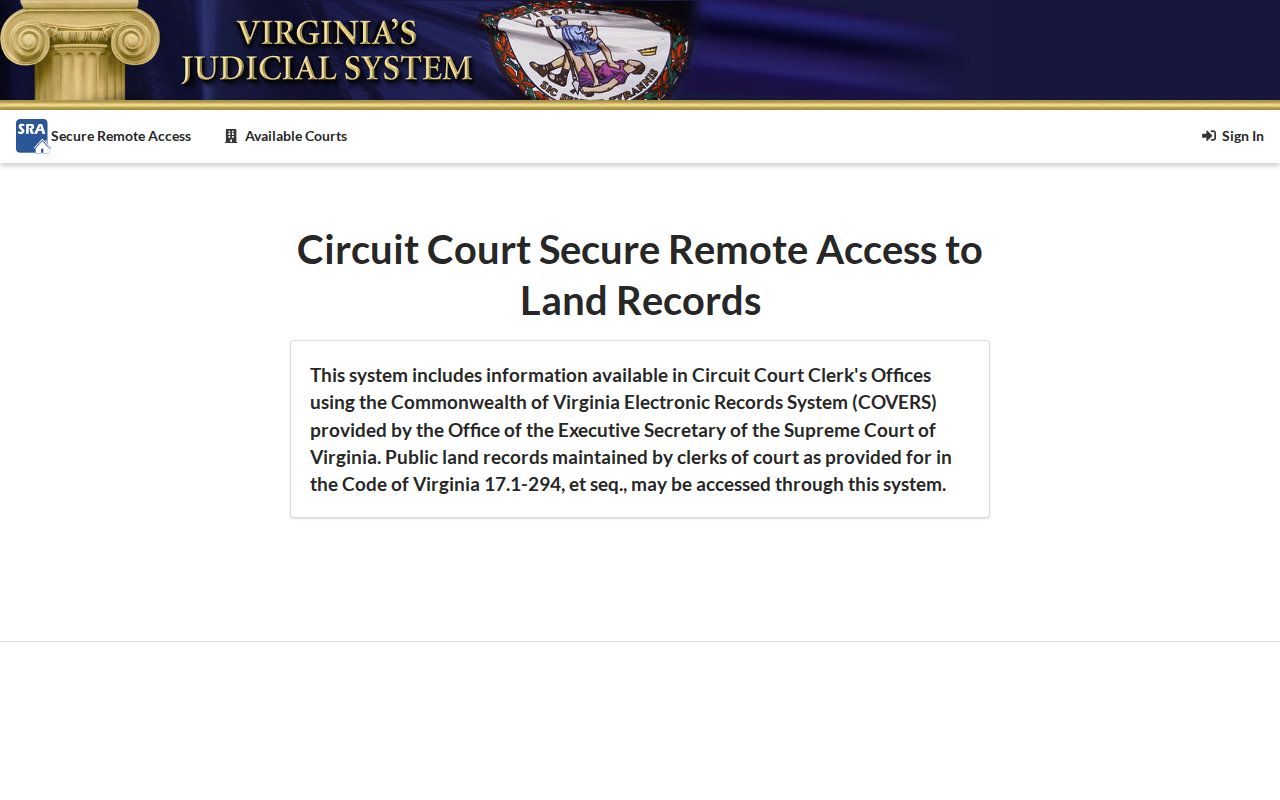
If the image is not available online, the free Record Room counter still lets you inspect the indexed deed.
The Isle of Wight Grantor Chain
Grantor and grantee simply mean the transferring and receiving parties. Start a chain with the most recent deed recorded for the parcel. Note both names, the legal description, the recording date, and the book/page or instrument number. Then search that earlier grantee's name as a grantee in a still older deed. Follow each new grantor backward, always confirming the legal description still describes the same land.
The county budget states that records from the 1600s to the present are online. That is a valuable lead for Isle of Wight deed research. It is not a precise per-book cutoff. If the online chain stops short, ask the Clerk about older volumes and the Record Room. Never assume a gap means a deed was lost.
- Find the latest deed for the parcel and write down the grantor, grantee, legal description, and reference.
- Search the grantee's name in the earlier period to find the instrument by which that party acquired the land.
- Compare the acreage, lot and block, adjoining owners, and exceptions before accepting it as the same tract.
- Repeat with each earlier grantor; ask the Clerk for book or paper guidance when the index ends.
- Grantor
- The person or entity conveying an interest in the instrument.
- Grantee
- The person or entity receiving an interest in the instrument.
- Chain of title
- The sequence of recorded instruments used to trace ownership over time.
- Book/page or instrument number
- The reference the index assigns to locate a recorded instrument; use the exact form shown in the result.
Isle of Wight Releases and Liens
The Clerk's own county description names deeds, deeds of trust, wills, plats, judgments, financing statements, liens, and other real-estate documents. County materials also mention agreements and certificates of satisfaction in the e-recording workflow. Together these categories give a buyer or owner a practical checklist for a parcel. That holds even without a portal dropdown entry for each one.
Search under both the current and prior owner. A lien may have been recorded under a borrower or grantor name. The legal description of the parcel is another useful clue. For a deed of trust, find the separately recorded release or certificate of satisfaction. Then compare its reference to the original financing instrument. A later deed does not remove earlier liens by itself.
Virginia Code §17.1-223 and related indexing provisions govern how recording and indexing work. That includes the removal of Social Security numbers before submission. A residential deed covering four or fewer units must include the statutory title-insurance or unknown statement plus preparer information.
Isle of Wight's 1600s Papers
Isle of Wight's paper trail reaches into the 1600s. The county budget describes fragile loose papers from that era, kept in mylar sleeves and non-acidic folders, with indexing still under way. Gaps happen in old chains. Ask the Clerk. A loose-paper series, an older deed book, or a related will may hold the missing clue. The Clerk publishes no book-by-book index cutoff.
Chancery suits often fill the same gaps. The Library of Virginia's Chancery Records Index adds testimony and exhibits to a partition, heir, or boundary dispute. CRI is not a deed index, though. It covers court causes, and its locality availability varies, so search its map for Isle of Wight first. Any case lead should point back to the local land instrument, which Isle of Wight's own deed record must still verify.
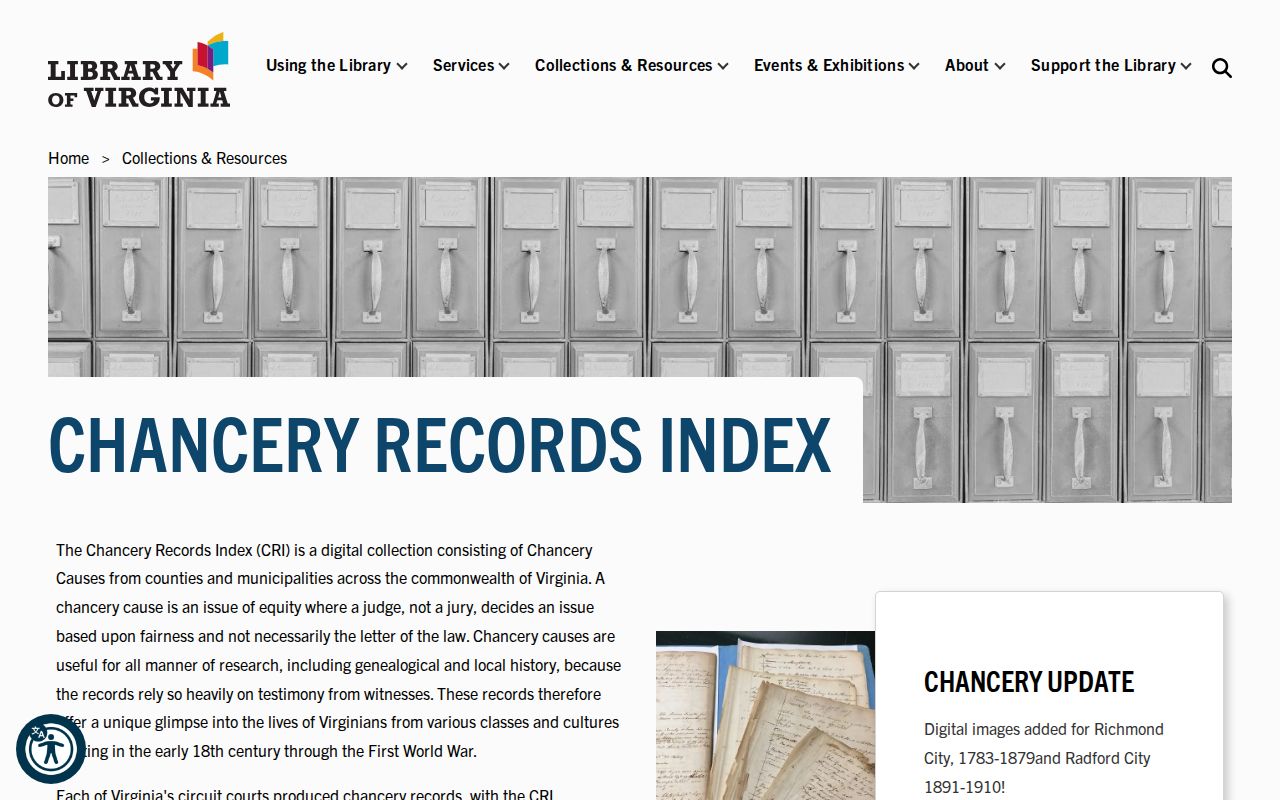
Pair the case with its deed, plat, or will.
Virginia Case Search for Isle of Wight
Some land questions end up in a courtroom. Virginia's Case Status and Information search spans the state. Coverage still varies by court. Search for a party or case number tied to a foreclosure, partition, quiet-title action, judgment, or boundary dispute. Then request the actual Isle of Wight file from the Circuit Court Clerk. A docket entry is not the underlying evidence.
The online case view can also come up short. Not every case image is public, and the portal leaves some result fields undescribed. Ask the Clerk about the Record Room and archival boxes. A quiet-title judgment can settle who holds what. It does not replace checking the recorded deed chain, liens, and releases in Isle of Wight's deed records. The Virginia Case Status and Information portal is the official statewide search, so use it to pin down a case number before contacting the county custodian.
For instrument copies, the Clerk's local land-record index governs.
Isle of Wight Deed Copy Requests
Save every detail from the index result first. Party names, recording date, legal description, and the book/page or instrument reference all matter. Then ask the Clerk how to see the image. A clerk-authorized SRA subscription, Record Room viewing, or a plain copy are the usual routes. The county budget confirms free Record Room viewing and subscription-based remote access. No fee for a copy or certification appears there, so confirm the amount and format before ordering.
Virginia FOIA covers records that are not online. Name the custodian and describe the instrument precisely. Give the parcel ID, grantor and grantee, approximate date, and legal description when available. A request can point the Clerk to a volume or image. It cannot settle title. For prior transfers, try the former-owner chain method.
Recorded, not guaranteed. The Isle of Wight index helps locate recorded instruments, but it is not a title opinion and may not show unrecorded interests. Verify the official record with the Clerk and use a title professional for a legal conclusion.